NATURAL COLOR AND TREATED COLOR DIAMONDS
Understanding Natural and Treated Color Diamonds: Insights from Kaisilver Experts
Diamonds have long fascinated gemstone lovers not only for their brilliance and durability but also for the spectrum of colors in which they appear. While most consumers associate diamonds with colorless or near colorless stones, nature has also produced diamonds in rare and captivating colors such as blue, pink, yellow and green. However, advances in gemstone technology have made it possible to alter the color of natural white diamonds through treatment processes. Experts at Kaisilver, the leading online source for high end custom made jewelry, explain that while treated color diamonds have a legitimate place in the jewelry market, buyers must clearly understand what they are purchasing.
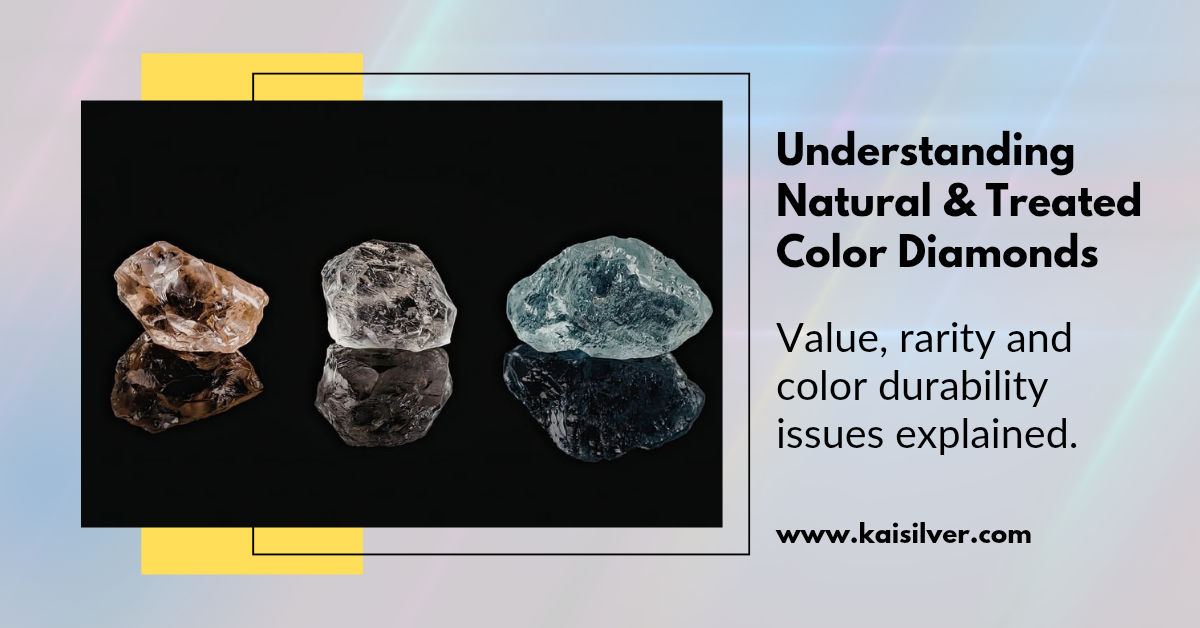
NATURAL FANCY COLOR DIAMONDS
Natural fancy color diamonds are among the rarest gemstones on earth. Their colors arise during the formation of the diamond deep within the earth’s mantle, often due to specific chemical elements or structural anomalies present at the time of crystallization. Because of their rarity and unique geological origins, naturally colored diamonds command extremely high prices in the international gemstone market. The experts at Kaisilver note that natural fancy color diamonds are prized by collectors, investors and high end jewelry connoisseurs for their authenticity and rarity.
Blue diamonds provide a classic example of how natural color occurs in diamonds. These diamonds derive their blue color from the presence of trace amounts of the element boron within the crystal lattice of the diamond. When boron atoms become incorporated into the structure of the diamond during formation, they alter the way the stone absorbs and reflects light, resulting in the beautiful blue hue associated with famous diamonds such as the Hope Diamond. Kaisilver experts emphasize that naturally occurring blue diamonds are extremely rare, which is why genuine natural blue diamonds command extraordinary prices in auctions and private collections.
Pink diamonds are another fascinating example of naturally colored diamonds, but their color origin is quite different. Unlike blue diamonds that receive their color from a trace element, pink diamonds owe their color to abnormalities in their internal crystal structure. These structural distortions occur during the geological formation of the diamond, often as a result of intense pressure within the earth’s crust. These irregularities affect how light travels through the diamond, producing the delicate pink coloration. According to Kaisilver, this structural cause of color explains why pink diamonds are not only rare but also difficult for scientists to fully replicate or reproduce in nature.
TREATED COLOR DIAMONDS
While natural color diamonds are rare and valuable, modern technology has made it possible to modify the appearance of diamonds through a variety of treatments. One of the most common methods involves taking a natural white or near colorless diamond and subjecting it to processes such as irradiation, high pressure high temperature treatment, or surface coating. These treatments can introduce vibrant colors including blue, green, yellow or pink. The result is a diamond that visually resembles a naturally colored stone but has achieved its color through human intervention rather than geological formation.
Experts at Kaisilver explain that treated color diamonds are not inherently problematic. In fact, they can provide buyers with visually attractive gemstones at a fraction of the cost of natural fancy color diamonds. The key issue lies in proper disclosure. A buyer must be fully aware that the diamond has undergone color treatment and that the color is not naturally occurring. Ethical gemstone trading requires transparency from sellers regarding any treatments applied to diamonds.
PROFESSIONAL DIAMOND CERTIFICATION
Another important aspect when purchasing colored diamonds is authentication and certification. Professional gemological laboratories such as GIA and other recognized testing institutions are capable of determining whether a diamond’s color is natural or treated. However, gemstone testing and certification involve costs, and these testing charges should be considered by buyers when evaluating the total cost of purchasing a colored diamond. Kaisilver notes that certification is particularly important when dealing with expensive stones because it provides confidence regarding the origin and authenticity of the diamond’s color.
The terminology used in the diamond trade can also create confusion for buyers. The term “fancy color diamond” is widely used in marketing, but gemological experts believe that this designation should ideally be reserved for diamonds whose colors originated naturally during their formation within the earth. Using the same terminology for treated diamonds can mislead consumers who may assume that the color is natural. According to Kaisilver specialists, maintaining clear and accurate terminology helps preserve trust within the gemstone market.
For buyers interested in colored diamonds, education remains the most valuable tool. Understanding the difference between natural color diamonds and treated diamonds allows consumers to make informed purchasing decisions. A treated diamond can be a beautiful and affordable gemstone, but its value and rarity differ significantly from those of natural fancy color diamonds.
UNDERSTANDING THE BASICS
In the final analysis, both natural and treated color diamonds have their place in the jewelry world. What matters most is transparency, proper documentation, and informed purchasing decisions. The experts at Kaisilver emphasize that buyers who understand the geological origins of diamond colors, the role of treatments, and the importance of professional certification will be well equipped to choose a gemstone that matches both their expectations and their budget.
WHO IS KAISILVER
Kaisilver has earned a strong reputation for crafting fine jewelry with a focus on quality, flexibility, and personalized service. Specializing in custom made jewelry, Kaisilver meticulously handcrafts all types of jewelry in gold or silver, ensuring that each piece is created with careful attention to detail. Unlike many traditional jewelry retailers that limit customers to a fixed catalog, Kaisilver places no restriction on gemstone selection or design. This open approach allows clients to create truly unique jewelry pieces that reflect their personal taste and style.
Clients can choose an existing Kaisilver design and request modifications to suit their preferences, whether it involves changing the gemstone, altering the metal, or adjusting the overall design. At the same time, customers are also welcome to submit their own design ideas. These concepts can then be developed and custom crafted by Kaisilver’s skilled artisans, turning individual ideas into finely finished jewelry.
An important aspect of the Kaisilver experience is the guidance provided by their knowledgeable team. Experts are available to discuss gemstone choices, design feasibility, durability, and other technical aspects of jewelry creation. This consultation process at sales@kaisilver.com helps clients make well informed decisions. Importantly, all discussions and consultations are offered without any obligation to make a purchase, ensuring a comfortable and transparent experience for every client.